The Real Villain in the Gentrification Story
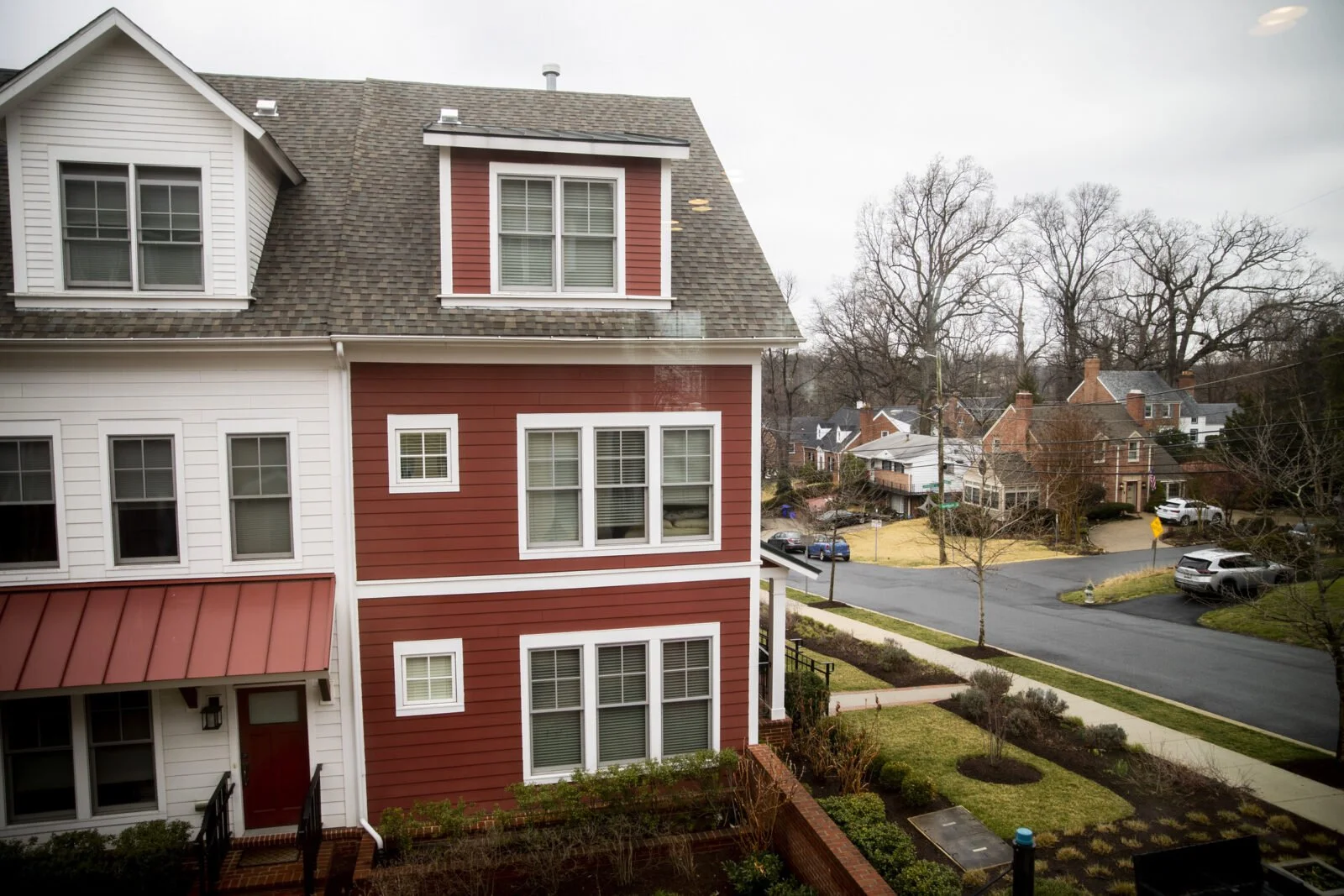
Cities are fundamentally engines of economic growth. They are agglomerations of workers and industries that have discovered that they are more productive together than they are apart. Perversely, instead of planning for population growth in urban areas, many American state and local governments have done the opposite: They have worked to restrict and slow construction, believing that a thriving, economically successful city could remain stagnant. Affordable-housing production in Washington, D.C., provides a clear example. Whereas the wealthy neighborhoods of Rock Creek West are just 1 percent of the way toward their goals, less exclusive neighborhoods have seen their supply swell. The real villains in the tale of gentrification are not 20-something new entrants to mixed-income neighborhoods, but NIMBY homeowners in the wealthiest ones.
VIEW HERE
Read More
How Houston Moved 25,000 People From the Streets Into Homes of Their Own
During the last decade, Houston, the nation’s fourth most populous city, has moved more than 25,000 homeless people directly into apartments and houses. The overwhelming majority of them have remained housed after two years. The number of people deemed homeless in the Houston region has been cut by 63 percent since 2011, according to the latest numbers from local officials. Even judging by the more modest metrics registered in a 2020 federal report, Houston did more than twice as well as the rest of the country at reducing homelessness over the previous decade. Ten years ago, homeless veterans, one of the categories that the federal government tracks, waited 720 days and had to navigate 76 bureaucratic steps to get from the street into permanent housing with support from social service counselors. Today, a streamlined process means the wait for housing is 32 days.
VIEW HERE
Read More
Twilight of the NIMBY
Suburban homeowners like Susan Kirsch are often blamed for worsening the nation’s housing crisis. That doesn’t mean she’s giving up her two-decade fight against 20 condos.
Susan Kirsch is a 78-year-old retired teacher who lives in a small cottage home in Mill Valley, Calif., on a quiet suburban street that looks toward a grassy knoll. A Sierra Club member with a pesticide-free garden, she has an Amnesty International sticker on her front window and a photograph on her refrigerator of herself and hundreds of other people spelling “TAX THE 1%” on a beach.
The cause that takes up most of her time, however, is fighting new development and campaigning for the right of suburban cities to have near total control over what gets built in them.
VIEW HERE
Read More
We’ve Got to Stop Requiring Parking Everywhere
There are more registered vehicles in California than there are adult human beings. This isn’t especially anomalous — vehicles outnumber people who can drive them in much of the United States — but the mismatch is particularly absurd in the nation’s most populous and most car-obsessed state, where people and cars have long been locked in a largely invisible battle for the same precious resource: places to park themselves.
For California’s people, the problem is acute. In part because of a longtime undersupply of new housing, California’s cities are some of America’s least affordable places to live; less than 25 percent of households can afford to purchase a median-priced single-family home in the state.
Housing for cars, on the other hand, is abundant and cheap — often, it’s free for the taking.
VIEW HERE
Read More
As Dance Loft Looks To Build A Permanent Home On 14th Street, Some Neighbors Balk
HELEOS and Dance Loft tout their effort as an innovative solution to two problems with the same cause: the lack of arts spaces and affordable housing, both victims of D.C.’s rapidly rising rent. The plan would double Dance Loft on 14’s size to 19,000 square feet, including two theaters and four dance studios. One of those would face out onto the street, allowing passersby to observe dancers at work.
“It’s really vital to ensure that arts organizations can have permanent homes. And in doing that, it enlivens the community as a whole,” Movius said, adding that the city needs places where artists can practice or make art, in addition to the theaters and galleries where work is displayed. “The more of those spaces that disappear, the less of a grassroots arts culture D.C. will have.”
VIEW HERE
Read More
Dance Loft wants to build a permanent home, but some neighbors balk
“Arts organizations that buy their buildings are the ones that are ensured permanent sustainability,” she said, pointing to Dance Place in Brookland as an example. “The trend in D.C. has been that arts organizations that rent their facilities typically eventually close.” In the past decade, D.C. Dance Collective in Tenleytown and Flashpoint in Penn Quarter were among the latter.
That’s why, a few years ago, she jumped at the chance to buy the building where her organization rented dance space. Movius, a dancer and choreographer, opened the current 8,000-square foot facility in 2015, and learned in 2018 that her landlord would be selling the building.
Movius sought out local developers for help and ended up teaming up with HELEOS. In April 2021, they purchased the building with funding assistance from private philanthropists and the D.C. Commission on Arts and Humanities.
VIEW HERE
Read More
Living near affordable housing may boost home values, new study finds
A new study from the Urban Institute think tank indicates that in small, high-density cities like Alexandria, the opposite may be true.
Researchers found that those living within roughly one city block — or 1/16th of a mile — of a new affordable housing development will probably see a small, but statistically significant, increase in property value, thanks to their proximity.
VIEW HERE
Read More
Yimby Movement Goes Mainstream in Response to High Housing Costs
With the average 30-year mortgage rate rising to 5%, home ownership may now be out of reach for millions more Americans. A special election Tuesday for a state Assembly seat in San Francisco largely centered around an increasingly potent issue in California: which candidate wants to build more housing. The race between two Democrats who describe themselves as progressives became something of a referendum on the Yimby movement, short for “yes in my backyard. Yimby activists in states such as California try to persuade Democrats that more construction is the best solution for homelessness and lack of affordable housing.
VIEW HERE
Read More
Report: Majority of renters can’t afford to buy in their city
A recent analysis by Porch, a home services platform, found that 61 percent of renters can’t afford to a buy a home in their city. High rents also make it difficult for tenants to save more to buy in the future. Double-digit rent increases in the past year make many renters long to lock in their housing costs by buying a home. But a recent analysis by Porch, a home services platform, found that 61 percent of renters can’t afford to a buy a home in their city. High rents also make it difficult for tenants to save more to buy in the future.
VIEW HERE
Read More
‘Neighborhood Defenders’ fight to maintain the status quo in Montgomery County
Right now, homeowners are challenging hundreds of apartments and townhomes that developers have applied to build in Montgomery County, including more than 180 homes for lower-income residents. The citizen activists, most of whom have hired lawyers, contend that the new housing will clog traffic, harm the environment, block views, create construction noise, or have other negative effects on their quality of life. At least one dispute has been elevated to court.
VIEW HERE
Read More
Public Meetings Thwart Housing Reform Where It Is Needed Most
The United States is facing a housing crisis of epic proportions, as prices skyrocket in municipalities across the country. For the middle class, it's a question of too many buyers chasing too few homes. For many Americans, however, housing is increasingly unaffordable without subsidy — of which there is not enough to meet the need.
VIEW HERE
Read More
The Housing Situation Is Dire. But Progress Is Still Possible
Good news is hard to come by on the housing front. The eviction moratorium has expired. Experts now predict skyrocketing home prices may rise indefinitely. According to a Pew study, more American adults today consider affordable housing a major worry in their communities than crime, drugs or Covid-19.
And no wonder. The lack of affordable housing is inseparable from racial and other disparities in health, education, public safety and economic opportunity. New York, by one estimate, is now the nation’s most segregated state. Not coincidentally, its deficit of nearly 650,000 affordable housing units is surpassed only by California’s.
VIEW HERE
Read More
A growing share of Americans say affordable housing is a major problem where they live
Prospective homebuyers and renters across the United States have seen prices surge and supply plummet during the coronavirus pandemic. Amid these circumstances, about half of Americans (49%) say the availability of affordable housing in their local community is a major problem, up 10 percentage points from early 2018, according to a Pew Research Center survey conducted in October 2021.
VIEW HERE
Read More
Why a Blue City Is Feeling the Blues
Conservatives will tell you that people are moving to Texas and Florida for the low taxes; but while New York’s taxes are indeed high, there’s not much evidence that they’re driving high-income residents away. What people are really doing is moving to places where housing is affordable, because governments don’t block new construction. And in the case of New York, NIMBYism is ultimately the reason a great global city has become a one-industry town, leaving it unusually vulnerable to pandemic-driven economic dislocations.
VIEW HERE
Read More
What’s behind rising homelessness in America?
Homelessness is not a new issue, but it is one that often doesn't receive a lot of attention. The number of Americans living without homes, in shelters, or on the streets continues to rise at an alarming rate. Estimates show that as many as half-a-million people are homeless in the U.S. on any given night. Judy Woodruff reports on why that is, and what more can be done to prevent it.
WATCH VIDEO HERE
Read More
Bowser Unveils Plans For More Affordable Housing West Of Rock Creek Park
D.C. Mayor Muriel Bowser on Thursday unveiled her plans to build almost 2,000 units of affordable housing in neighborhoods west of Rock Creek Park, the city’s wealthiest and whitest area — and the one with the smallest current stock of housing that’s affordable to low- and moderate-income residents.
VIEW HERE
Read More
D.C., Developers Struggling To Meet The Moment In Building Art Space
In 2015, the D.C. Council ordered the municipal government to begin the process of creating the city’s first-ever Cultural Plan to guide public investment in the arts. Two key areas of real estate needs for artists emerged from the Cultural Plan: affordable housing and studio space. While programs exist to support the creation of below-market-rate residential units, developers are finding it is far trickier to meet the commercial needs of the creative community, which struggles with permitting and access to capital.
VIEW HERE
Read More
Blue States, You’re the Problem: Why do states with Democratic majorities fail to live up to their values?
In key respects, many blue states are actually doing worse than red states. It is in the blue states where affordable housing is often hardest to find, there are some of the most acute disparities in education funding and economic inequality is increasing most quickly.
VIEW HERE
Read More
After A Scathing Audit, Tougher Oversight Could Be Coming For D.C.’s Affordable Housing Trust Fund
A searing audit of D.C.’s most important affordable housing funding source has reignited concerns about opaque decision-making and a lack of accountability at the city’s Department of Housing and Community Development, and a member of the D.C. Council’s housing committee now plans to introduce legislation to tighten oversight of the agency. The recent report from D.C.’s Office of the Inspector General says the housing agency, under the recently retired director Polly Donaldson, failed to meet a legally mandated goal to direct at least 50% of the city’s annual Housing Production Trust Fund dollars toward creating and preserving homes for the city’s poorest residents.
VIEW HERE
Read More
If Your Rent Is Going Up, This Episode Is for You
I don’t know if you’ve heard this, but America is running out of affordable places to live. If you’ve lived in any city for the past five years, this likely isn’t news to you. Why? It’s a combination of strict zoning policies, changes in demand and supply, and growing inaccessibility for low income families among a lot of other factors.
VIEW HERE
Read More